Top Dusk to Dawn Solar Lights How Do Their Sensors Work?

Time:2026-10-29 Author:Mason
0%

Dusk-to-dawn solar lights switch on when surrounding light falls and switch off after daylight returns. Their sensor is usually a small photocell, such as a photoresistor or photodiode, that responds to changes in ambient brightness. During the day, the solar panel charges a rechargeable battery. At night, the control circuit uses the sensor’s reading to power the LEDs. Simple in principle. In practice, sensor placement, shade, and nearby porch or streetlights can affect when a light changes state. So, how does dusk to dawn sensor work on solar lights? It compares the light around the fixture with a built-in threshold, then signals the electronics to turn the lamp on or off.

The details vary by model. Some lights use a separate photocell, while others build the sensor into the main circuit board. A motion sensor may also be included, but it serves a different purpose: it detects movement and can brighten the lamp temporarily. Check the product specifications before assuming every dusk-to-dawn light works the same way. A sensor covered by dirt, leaves, or a nearby wall may read darkness at the wrong time. There is a small catch. A light that turns on late is not always faulty; local shade or artificial light may be confusing its sensor. Understanding these limits makes it easier to compare top dusk-to-dawn solar lights and choose a model suited to the actual spot where it will be installed.
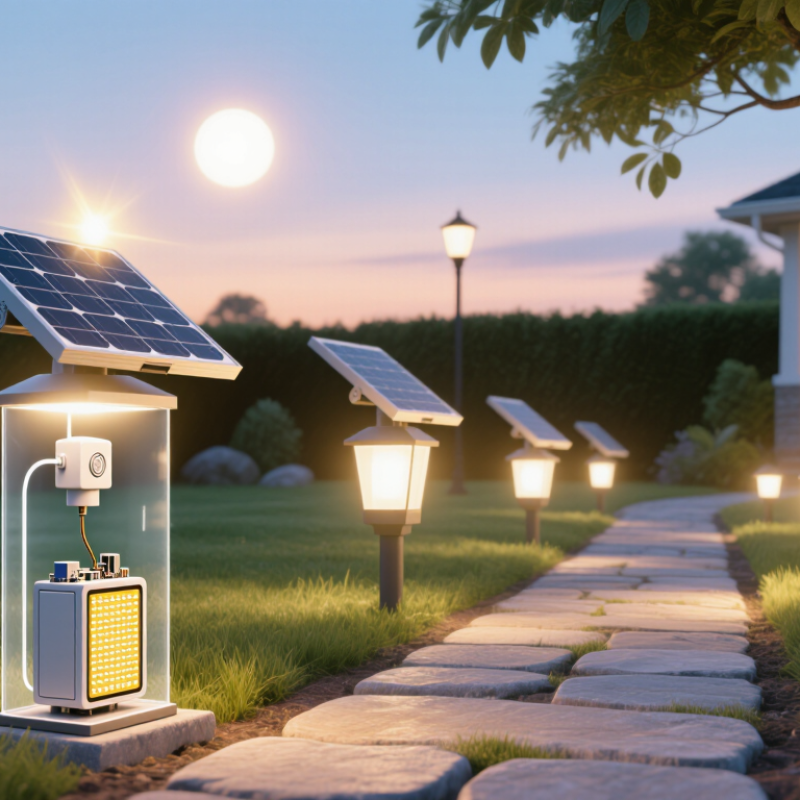
Top Dusk to Dawn Solar Lights How Do Their Sensors Work?

What Dusk-to-Dawn Solar Lights Are

Dusk-to-dawn solar lights are outdoor fixtures that collect sunlight by day and use stored energy to illuminate spaces after dark. A small photovoltaic panel charges a rechargeable battery, while a controller manages charging and power delivery. A light sensor, often a photocell, detects falling ambient light and signals the lamp to turn on. At sunrise, it switches the lamp off. That’s the basic cycle. Some models also include motion sensors, which brighten the light when movement is detected; that feature is separate from dusk-to-dawn operation.

The panel may sit atop the fixture or connect by cable, so its position matters: shade, dirt, and winter daylight can reduce charging. Battery size, panel output, and temperature also affect how long the light stays on. The International Renewable Energy Agency reported that utility-scale solar PV’s global weighted-average electricity cost fell 90% from 2010 to 2023, reaching USD 0.044 per kilowatt-hour in its Renewable Power Generation Costs in 2023 report. That figure describes large power plants, not individual garden lights. One practical caveat: a sensor can respond to nearby artificial light, so a lamp under a porch light may switch on late or not at all. Test its location after sunset.

The Main Sensors Used in Solar Lights

Most dusk-to-dawn solar lights use a photocell to sense ambient light. At dusk, the sensor detects falling brightness and switches the lamp on. At dawn, it detects brighter conditions and turns the lamp off. Simple, but placement matters. A porch lamp or passing headlights can fool a poorly positioned sensor.

Motion-activated models often add a passive infrared sensor, or PIR. It responds to changes in infrared energy when a warm object moves across its detection area. A person walking near the path may trigger brighter output, while the light stays dim or off when nobody is nearby. PIR sensors work best with a clear view; walls, dense plants, and some window glass can limit detection. Not every solar light includes one.

Tips: Keep the photocell uncovered and angle the light away from nearby lamps. Test the motion sensor after dark by walking across its field of view, not straight toward it. Allow time for adjustment. Sensor range can vary with temperature, mounting height, and obstacles, so the package estimate may not match your yard exactly. A small limitation, but worth checking before moving the fixture.

How Dusk-to-Dawn Solar Light Sensors Work

A photocell—often a photoresistor (LDR) or photodiode—measures ambient light. The controller switches the light on when illumination falls below its set threshold and off again as daylight returns. Some fixtures also use a PIR sensor to detect movement; PIR senses changes in infrared radiation, not daylight.

Representative illuminance levels in lux on a logarithmic scale. Actual levels vary with weather, location, and surroundings; these are reference points, not universal sensor activation thresholds.

How Photocells Detect Changes in Ambient Light

A dusk-to-dawn solar light uses a small photosensor to judge whether its surroundings are bright or dark. Many models use a photoresistor, whose electrical resistance changes as light falls on its surface. A controller reads that change and compares it with a set threshold. Some designs use a photodiode instead. Not magic.

As evening light fades, the sensor’s reading crosses the threshold, and the controller switches the lamp on. At sunrise, stronger light pushes the reading back the other way. Many lights add a short delay or a small margin around the threshold, which helps prevent flickering when clouds pass or headlights sweep across the sensor. The exact response depends on the circuit and its settings.

Placement matters. A sensor tucked beneath a deep porch roof may read darkness earlier than one exposed to open sky. Nearby windows or decorative lighting can also confuse it, keeping a lamp off when the path is dim. Check the sensor’s view, not just the panel’s position. There is a useful caveat: “ambient light” is not the same as how bright a walkway feels to a person. A photocell measures light where it sits, so a sensible setup may still need a little adjustment after installation.

How Sensor Signals Control Light Operation

A dusk-to-dawn solar light uses a photosensor to read surrounding brightness. In daylight, the sensor sends a signal that keeps the LED off and allows the panel to charge the battery. When light levels fall below a set threshold, the controller switches the LED on. At dawn, the signal rises and the controller turns it off. Simple in principle.

The controller often adds a delay or uses separate on and off thresholds. This helps prevent brief cloud cover, passing headlights, or a nearby porch light from triggering repeated switching. The sensor’s position matters: a fixture shaded by a roof may turn on too early, while one facing a bright window may stay off too long. It is not magic. Dust, aging components, and poor placement can all affect the signal.

For context, Lawrence Berkeley National Laboratory’s 2012 meta-analysis, A Meta-Analysis of Energy Savings from Lighting Controls in Commercial Buildings, reported average lighting-energy savings of about 24% for occupancy sensors. That figure concerns commercial indoor controls, not solar dusk-to-dawn products, so it should not be treated as a performance rating for them. Still, it shows how control signals can influence lighting use. One limitation remains: a photocell detects brightness, not whether anyone needs the light.

Factors That Affect Sensor Accuracy and Performance

A dusk-to-dawn light usually relies on a photocell that measures ambient brightness. Its accuracy depends on more than the sensor itself. A sensor facing a streetlamp, bright window, or reflective wall may read the sky as brighter than it is, delaying switch-on. Leaves, dust, and water droplets can also shade or cloud the sensor. NREL’s National Solar Radiation Database provides solar-irradiance records at hourly or half-hourly intervals, reflecting how quickly sunlight conditions can change. A fixed threshold cannot respond perfectly to every passing cloud.

Placement matters. Keep the photocell exposed to open sky, but shield it from direct light produced by the fixture; otherwise, the light may switch off and on repeatedly. Solar-panel output also affects performance: NREL’s PVWatts technical documentation uses irradiance and temperature data to estimate photovoltaic energy production. That matters because a weak charge can shorten nighttime operation, even when the sensor switches correctly. Check the panel and sensor after several cloudy days, and compare their exposure at dusk. Real sites are messier. Nearby lighting, seasonal foliage, and grime can all shift results, so the best threshold may still need adjustment.

FAQS

How do dusk-to-dawn solar lights work?

A solar panel charges a rechargeable battery during daylight. After dusk, a light sensor tells the controller to switch on the lamp.

What turns the light off in the morning?

The sensor detects rising daylight, and the controller switches off the LED. The panel can then charge the battery again.

Why might a light switch on late or stay off?

Nearby porch lights, bright windows, or passing headlights can confuse its sensor. Try angling it away from artificial light.

Where should I place the solar panel?

Choose a spot with direct daylight and little shade. Dirt, winter sun, and a roof overhang can reduce charging.

Do all dusk-to-dawn lights have motion sensors?

No. A photocell handles dusk-to-dawn operation; some models add a separate motion sensor to brighten the light when movement occurs.

How can I test a motion sensor?

After dark, walk across its detection area rather than straight toward it. Walls, dense plants, and some glass may block detection.

Why does the light sometimes switch on and off unexpectedly?

Brief cloud cover or headlights may affect the sensor. Some controllers use delays to reduce repeated switching, but placement still matters.

Will the light stay on all night?

It depends on battery size, panel output, temperature, and daylight exposure. A shaded panel may leave the battery short by evening.

Can a photocell tell whether someone needs the light?

No. It detects brightness, not people or purpose. That is useful, though a little less thoughtful than we might want.

Conclusion

Dusk-to-dawn solar lights use stored solar energy to provide light automatically when the surrounding area becomes dark. Their operation typically depends on a light sensor, often a photocell, working alongside a small control circuit. The photocell responds to changes in ambient light, allowing the system to distinguish brighter daytime conditions from nighttime. If you are wondering how does dusk to dawn sensor work on solar lights, the basic principle is that the sensor detects falling light levels and signals the controller to switch the lamp on; when daylight returns, it signals the controller to switch it off.

Sensor performance can vary with placement and environmental conditions. Direct light from nearby lamps, shadows, dirt on the sensor, weather, and the sensor’s sensitivity settings may affect when the light turns on or off. A clear, appropriately positioned sensor and a suitable threshold help support more consistent operation. Together, the sensor and controller manage the light’s daily cycle while helping conserve the energy stored in the battery.

Mason

Mason

Mason is a seasoned marketing professional with a deep expertise in the company's offerings and a passion for driving brand awareness. With a strong background in digital marketing strategies, he has an innate ability to connect with diverse audiences and effectively communicate product benefits.......