Outdoor lighting should make a home feel safer, not turn a neighbor’s bedroom into a bright stage. For Chinese villas, balconies, courtyards, and shared residential lanes, the question is practical: how to shield outdoor lights from neighbors without losing useful visibility? Good design starts with direction, not brightness. Full-cutoff fixtures, deep hoods, side shields, and downward mounting can keep light below eye level. Warm LEDs around 2,700–3,000K usually feel less harsh than cool-white lamps.
The scale of the problem is measurable. The World Atlas of Artificial Night Sky Brightness, published in Science Advances, estimated that more than 80% of the world’s population lives under light-polluted skies. A 2023 Science study by Kyba and colleagues reported that observed night-sky brightness increased by about 9.6% annually in sampled locations. These figures describe broader skyglow, not every backyard. Still, they show why small residential choices matter. DarkSky’s outdoor-lighting guidance also emphasizes useful, targeted, controlled, and warmer lighting.
Paul Bogard, author of The End of Night, wrote, “The night is a natural resource.” That idea changes the installation mindset. Shielding protects sleep, privacy, wildlife, and neighborhood comfort. A simple field test helps: stand across the property line after sunset, then check whether the lamp is visible above the fence. Adjust the angle, lower the output, or add a timer. There is no perfect fixture. Even a shield can fail when mounted too high. This guide will examine practical products and installation details for how to shield outdoor lights from neighbors, while acknowledging that real homes, walls, trees, and expectations differ.
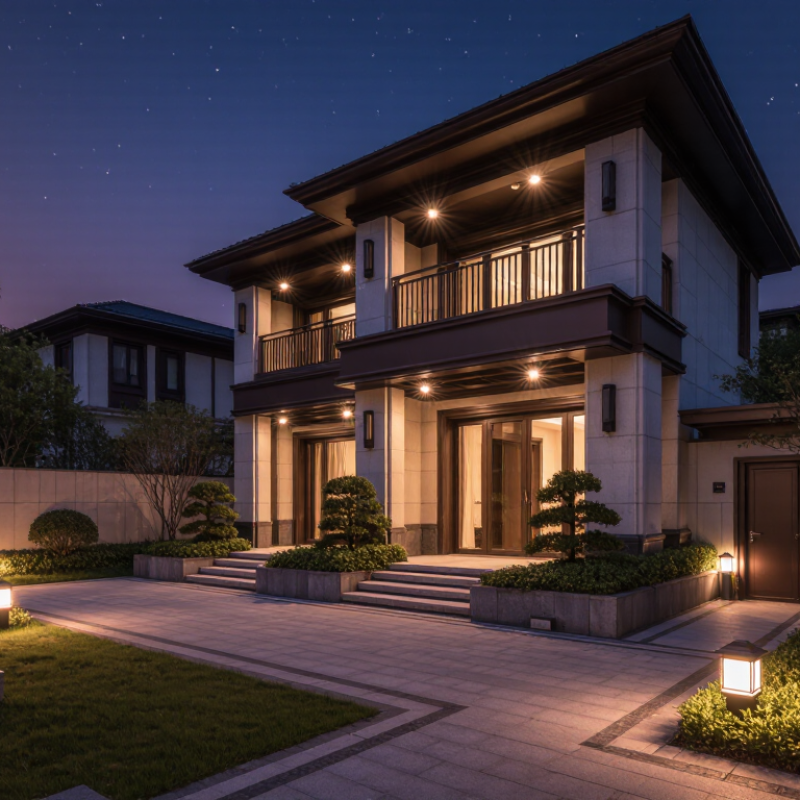
China Best Outdoor Lights: How to Shield Them From Neighbors?
Outdoor lighting can improve security, but uncontrolled brightness may disturb nearby homes. A bare fixture aimed across a fence can shine through bedroom curtains, reflect from windows, and create harsh shadows. Neighbors may lose sleep or feel their privacy has changed. The issue is not brightness alone. Direction, mounting height, color temperature, and operating time all matter.
A practical installation starts with shielding. Use a hood, side screen, or fully covered fixture that sends light downward. Keep the beam below eye level and avoid pointing it toward windows or shared paths. Warm light, usually around 2700K to 3000K, often feels less intrusive than cold white light. Motion sensors and timers can reduce unnecessary operation after midnight. Check the installation from the neighbor’s viewpoint, not only from your yard.
I once adjusted a wall light after noticing its glare on a nearby window. The fixture looked acceptable indoors, but the outdoor reflection was surprisingly strong. A small downward tilt solved most of it. Still, shielding can create dark spots near steps, so safety needs another inspection. Local outdoor-lighting rules may also limit glare, timing, or light spill. A responsible setup protects your property without making someone else feel watched or disturbed.
Practical outdoor-lighting protection measures for reducing glare, light spill, and neighborhood disturbance
| Potential Disturbance | Common Cause | Recommended Shielding Method | Useful Design Guidance | Expected Benefit |
|---|---|---|---|---|
| Direct glare into windows | Visible LED sources, exposed bulbs, or fixtures aimed toward neighboring properties | Use full-cutoff or shielded fixtures that hide the light source from normal viewing angles | Aim the beam downward and keep the fixture below or away from the direct sightline of nearby windows | Reduces visual discomfort and prevents bright points of light from entering rooms |
| Light trespass | Light extending beyond the property boundary onto walls, gardens, or windows | Install side shields, louvers, glare guards, or adjustable beam angles | Position fixtures close to the area being lit and avoid aiming across property lines | Keeps illumination focused on paths, entrances, steps, and other intended areas |
| Excessive brightness | Selecting a higher-lumen fixture than the space requires | Choose lower-output lighting or use dimming and multi-level controls | Use the lowest practical output that provides safe visibility; avoid lighting empty areas at full power | Limits glare, energy use, and unnecessary nighttime brightness |
| Harsh cool-white appearance | High color-temperature light appearing blue-white in residential settings | Select a warmer color temperature appropriate for the outdoor environment | A range around 2700–3000 K is commonly used for comfortable residential outdoor lighting | Creates a softer appearance and may reduce perceived harshness |
| Late-night disturbance | Lights remaining at full brightness throughout the night | Use timers, astronomical controls, occupancy sensors, or scheduled dimming | Set operation periods according to household needs and local requirements; use motion sensors with a short hold time | Reduces unnecessary exposure during sleeping hours while preserving security lighting |
| Uncontrolled upward light | Open-top fixtures, decorative globes, or poorly aimed floodlights | Use downward-directed optics, opaque tops, and fixtures with limited upward light | Check the fixture after installation from the neighbor-facing direction, not only from inside the property | Reduces skyglow and light escaping outside the target area |
| Moving or intermittent glare | Motion sensors aimed toward sidewalks, roads, or neighboring activity | Adjust sensor range and direction; add a shield to block unwanted detection zones | Use the smallest detection area that covers the entrance, path, or driveway | Prevents repeated activation caused by movement outside the property |
| Weather-related light spread | Rain, fog, dust, or moisture scattering light from an overpowered fixture | Reduce output, improve shielding, and select optics suited to the application | Inspect the installation during wet conditions to identify visible halos or stray beams | Limits scattered brightness and maintains better control in changing weather |
Light trespass occurs when outdoor light crosses a property line. It may enter a neighbor’s window, bedroom, or yard.
Stand inside the affected room after dark. Look for sharp shadows, bright ceilings, or reflections on window glass.
Not completely. Phone cameras may exaggerate glare, so compare the screen with what your eyes actually see.
Common causes include exposed bulbs, high fixtures, strong output, and upward-facing beams. Fog can scatter cool light widely.
Aim fixtures downward toward paths, steps, doors, or gates. Keep the beam below the horizontal line.
Yes. Lowering a fixture slightly or tilting it five degrees may reduce glare. My first adjustment is not always correct.
They can block direct views of the lamp. Use side shields when the lens remains visible from the neighboring property.
They reduce unnecessary lighting when properly set. Keep activation near one or two minutes, and avoid repeated flashes.
Clean lenses every few months and inspect shields after storms. Loose stakes, dust, and growing branches can redirect light.
Inspect the fixture from several nighttime viewpoints. Recheck after rain, because wet pavement may reflect light farther than expected.
Outdoor lighting improves safety, visibility, and comfort, but poorly controlled fixtures can create glare, light trespass, and unwanted brightness for nearby residents. This guide explains how to shield outdoor lights from neighbors by identifying common problems, such as exposed bulbs, excessive brightness, incorrect beam angles, and fixtures aimed toward windows or neighboring yards. Understanding these causes makes it easier to create a more considerate lighting plan.
The article also covers how to choose outdoor lights with built-in shielding, adjustable beams, suitable color temperatures, and lower brightness levels. Proper positioning and aiming can direct illumination toward pathways, entrances, and activity areas without spreading light across property lines. Finally, practical advice on installation, timers, motion sensors, regular cleaning, and routine adjustments helps maintain effective, neighbor-friendly lighting while reducing glare and unnecessary nighttime disturbance.

 Habel Lighting